

Most athletes don’t realise they’re under-recovered until they’re already grinding through a session that should feel easy, or worse, sitting out with a strain they didn’t see coming. The problem isn’t effort. It’s an information problem. A single metric like resting HR or sleep duration can’t capture what’s really happening in your nervous system and musculature. Research shows roughly one-third of recreational runners will experience non-functional overreaching at some point (PMC overtraining review, 2012). Prism’s training readiness score fuses 11 biometric signals into one daily number, so you know when to push and when to pull back. This article explains exactly how each signal works and why the algorithm is built the way it is.
TL;DR: Prism’s 1–100 training readiness score combines HRV, sleep, resting HR, body temperature, respiratory rate, acute workload, muscle group recovery, and perceived effort into a single daily number. About 33% of recreational runners experience non-functional overreaching (PMC, 2012). A multi-signal score catches the warning signs earlier than any single metric can.
Why Is One Metric Never Enough?
Non-functional overreaching affects roughly 33% of recreational runners and up to 60% of elite runners (PMC overtraining review, 2012). These aren’t people ignoring warning signs. They’re people reading the wrong ones. HRV alone will miss the athlete sleeping six hours a night. Sleep duration alone won’t catch the nervous system that’s quietly accumulating stress from back-to-back hard sessions.
Each biometric signal has real blind spots. HRV is highly sensitive to parasympathetic nervous system tone, but it’s also noisy. One poor night’s sleep, a glass of wine, or unusual heat can suppress it without any actual training overload. Sleep duration tells you nothing about what happened during those hours. Resting HR responds slowly; it can take days to rise meaningfully after a bout of overtraining. None of these signals is unreliable. They’re just incomplete on their own.
So what happens when multiple signals go bad simultaneously? This is where single-metric apps quietly fail you. If your HRV is suppressed AND you slept poorly AND your resting HR is elevated, a naive scoring system would stack those penalties and crush your score unfairly, making a moderate under-recovery state look like complete physiological collapse.
Prism handles this with a dynamic capping system. When critical signals like sleep ratio or HRV ratio drop below defined thresholds simultaneously, the algorithm tightens the cap on combined acute load penalties. The cap on combined workload-related deductions moves from -20 to -28, distributing the penalty budget differently rather than allowing runaway stacking. You still get a nuanced score that reflects real multi-system stress, not an artificially crushed number that sends you straight to the couch when a moderate rest day would do.
Is HRV Really the Gold Standard for Recovery?
HRV RMSSD drops by 40% immediately after high-intensity training, and it’s still 18% below baseline two hours later (MDPI Applied Sciences, 2025). SDNN drops 35% and pNN50 drops 55% immediately post-session. These aren’t small fluctuations. They’re the nervous system clearly signalling that it needs time.
HRV (heart rate variability) measures the millisecond-to-millisecond variation between consecutive heartbeats. High variability means your parasympathetic nervous system (“rest and digest”) is in control. Low variability means your sympathetic nervous system (“fight or flight”) is dominating. After hard training, the sympathetic system stays activated. That’s normal and expected. The question is whether it’s recovered by the time you want to train again.
Here’s the trap most people fall into: comparing their raw HRV number to population averages. An RMSSD of 45 ms might be great for one athlete and terrible for another. Age, fitness level, genetics, and even measurement timing all shift the baseline. Plews et al. (2013) established that what matters is your HRV relative to your own rolling 7-day average, not a population chart (Sports Medicine, 2013). This is the approach Prism uses.
How Prism uses HRV: Your latest morning HRV is compared against your personal 7-day rolling average. The scoring works like this: a ratio below 0.85 (meaning today’s HRV is more than 15% below your recent baseline) applies a -12 point penalty. A ratio below 0.95 applies -6 points. A ratio above 1.05, meaning you’re genuinely recovered above your recent norm, earns a +5 bonus.
Prism’s HRV thresholds were deliberately set conservative based on the research. A single bad night of sleep can spike sympathetic tone and suppress HRV without indicating true overtraining. The thresholds are designed to flag a real pattern, not punish you for one rough night of data.
Citation capsule — HRV and recovery: HRV RMSSD drops 40% immediately after high-intensity training and remains 18% suppressed two hours later, according to a 2025 MDPI Applied Sciences study. Plews et al. (2013) established in Sports Medicine that tracking HRV relative to an individual’s own rolling 7-day baseline, not population norms, is the valid approach for monitoring training adaptation in endurance athletes.
Is Sleep Really the Foundation Everything Else Is Built On?
Athletes sleeping fewer than 8 hours per night are 1.7 times more likely to have sustained an injury compared with athletes who sleep 8 or more hours (PMC Sleep and Athletic Performance, 2023). The same review found that roughly 50% of athletes sleep fewer than 8 hours per night, while elite athletes need an average of 8.3 hours but are averaging only 6.7 hours. That’s a chronic shortfall with real consequences.

Samuels (2008) called sleep “the new frontier in high-performance athletics,” and the research has only strengthened that case since (Neurologic Clinics, 2008). The mechanisms are well understood: growth hormone release peaks during slow-wave sleep, tissue repair accelerates overnight, and cognitive consolidation of motor patterns happens during REM. Cut sleep short and you’re shortchanging the actual adaptation process.
What’s particularly striking is how sleep affects skill. A 2025 Frontiers in Physiology meta-analysis found an effect size of -2.22 for skill-based task performance under sleep deprivation (PMC, 2025). That’s a massive effect. You might feel physically capable of training, but your technique, reaction time, and coordination are substantially degraded.
How Prism scores sleep: The algorithm uses a two-layer approach. First, absolute floor penalties fire regardless of your personal baseline: below 5.5 hours applies -12 points, below 6.5 hours applies -5 points. This matters because a chronically sleep-deprived person would otherwise score neutral — their depressed average normalises the deprivation. A relative penalty then compares last night against your 7-day rolling average, softened to avoid double-stacking when the absolute floor has already fired. New users without enough baseline history are scored against the research-backed 7–9 hour guideline until sufficient data accumulates. Low sleep efficiency (below 80%) adds a further -10 points. Relative bonuses are only granted when absolute sleep duration is also healthy — so you can’t offset a chronically low baseline with one slightly-better-than-awful night.
Citation capsule — sleep and injury risk: A 2023 PMC systematic review on sleep and athletic performance found that athletes sleeping fewer than 8 hours per night face a 1.7-fold increased injury risk. Approximately 50% of athletes fall below this threshold. Elite athletes require an average of 8.3 hours but achieve only 6.7 hours, representing a chronic recovery gap with direct performance consequences.
What Does the ACWR Research Actually Say About Injury Risk?
An Acute-to-Chronic Workload Ratio (ACWR) at or above 2.0 is associated with a 6.27-fold in-season injury risk compared with an ACWR between 0.50 and 0.99 (PMC ACWR Systematic Review, 2020). The sweet spot for lowest injury risk sits between 0.8 and 1.3. Spike too far above that range and the injury odds climb steeply.
Gabbett (2016) popularised the ACWR concept in a landmark British Journal of Sports Medicine paper: compare your recent acute training load (typically the past week) to your chronic load (the past 3–4 weeks) (BJSM, 2016). The ratio tells you whether you’re training in line with what your body is prepared for. A ratio of 1.0 means this week matches your recent norm. A ratio of 2.0 means you’ve doubled your recent load, which is where the injury risk multiplier becomes severe.
It’s worth being honest about the ACWR’s limitations. The metric has been critiqued for methodological variability. Different rolling window definitions produce different results, and the research base mixes sports with very different load profiles. Prism doesn’t implement a strict mathematical ACWR. Instead it uses a conservative, smoothed heuristic: the intensity-weighted training volume of the last 7 days compared against the prior 7 days, with penalties applied when the ratio climbs into the danger zones.
The scoring: an ACWR above 1.75 applies -12 points. Above 1.25 applies -6 points. A lower-than-usual ratio — meaning you’ve trained less than your recent norm — doesn’t penalise you. More recovery relative to your baseline is a readiness positive, not a concern. The detraining risk from sustained underloading plays out over weeks, not in today’s score.
Prism also runs a 48-hour short-window check that standard ACWR implementations miss entirely. This compares intensity-weighted training volume from the last 48 hours against your daily baseline. It catches the specific danger scenario where your weekly totals looked fine on Friday, but you then trained hard on Saturday and Sunday back-to-back. The weekly average smooths over that spike. The 48-hour window doesn’t.
Citation capsule — ACWR and injury risk: A 2020 PMC systematic review found an ACWR at or above 2.0 is associated with a 6.27-fold increase in in-season injury risk compared with a ratio of 0.50–0.99. The lowest injury risk sits between 0.8 and 1.3. Gabbett (2016) in the British Journal of Sports Medicine established the theoretical basis for the training-injury prevention paradox: too little load leaves you underprepared; too much spikes your risk.
Is the 48-Hour Recovery Rule Actually Science, or Just Gym Folklore?
DOMS peaks between 24 and 72 hours post-exercise (Sports Medicine DOMS review, 2003). Full recovery for major muscle groups typically requires 48 to 72 hours. This isn’t a bro-gym rule. It has a clear physiological basis.

When you return to a muscle group before it’s recovered, you’re not building on fresh tissue. You’re compressing the repair window, impairing adaptation, and elevating injury risk. A 2019 PMC review on rest intervals found that 48 to 72 hours is the minimum recommended inter-session recovery for major muscle groups (PMC, 2019). More for novices; potentially less for well-trained athletes with a history of high-frequency training.
How Prism tracks muscle group recovery: Every session is tagged with the muscle groups it targets. Prism then monitors each group independently and counts how many times you’ve hit that group with a recovery gap of fewer than 48 hours. The penalties are progressive: one occurrence applies -3 points, two occurrences -6 points, three or more -10 points, capped at -12 total for this component.
On top of that, Prism applies a consecutive-day streak penalty. Training the same muscle three days in a row applies -6 points. Four or more consecutive days pushes that to -10, with an additional -4 if at least two of the last three sessions were rated as hard or failure-level effort. You can do back-to-back training days, but not back-to-back hard training days on the same muscles without cost.
Can Your Smartwatch Predict Illness Before You Feel It?
Elevated respiratory rate above 17% of an individual’s personal baseline was able to flag illness up to three days before a positive COVID-19 test in athletes (PMC WHOOP study, 2023). That’s not a small signal. That’s your wearable telling you something is wrong before your immune system has fully declared the fight.
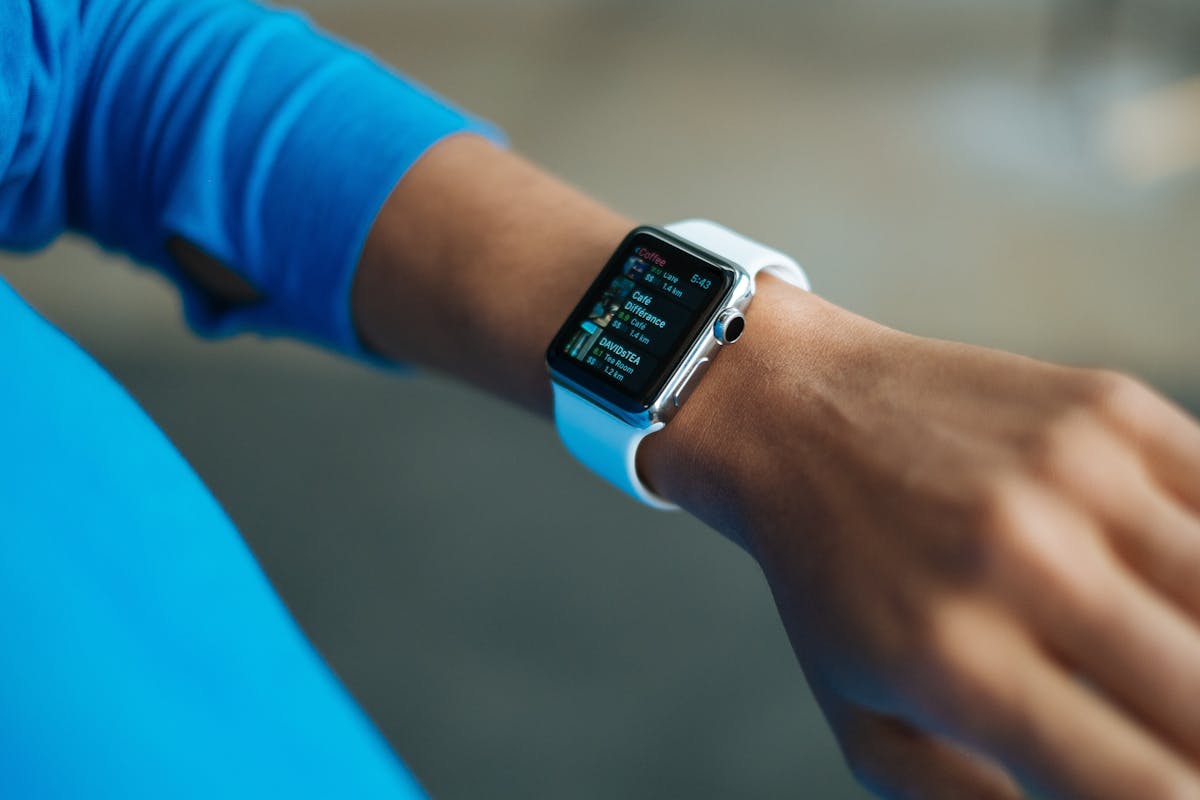
Prism pulls resting HR, body temperature, and respiratory rate from HealthKit/Apple Watch and compares each against your personal 7-day rolling average. Population norms are irrelevant here. What matters is your deviation from your own baseline.
Resting HR
A resting heart rate that climbs 5 to 7 bpm above your personal baseline is a recognised flag for under-recovery (PubMed, 2016). In a 20-day stage race, morning resting HR rose cumulatively by 10 bpm above baseline as physiological stress compounded (PubMed, 2008). Prism flags a deviation of 5 bpm and applies a -10 point penalty for any deviation exceeding 10% above your 7-day average. A +3 bonus applies when resting HR is meaningfully below baseline, a sign of genuine cardiovascular recovery.
Body Temperature
A deviation of 0.5°C or more above an individual’s personal wearable-measured baseline is considered a clinically meaningful illness signal (PMC wearable sensor review, 2022). Fever thresholds designed for population screening miss the sub-clinical rises that precede illness by a day or two. Prism applies -12 points for a delta at or above 0.6°C and -6 points for a delta at or above 0.3°C.
Respiratory Rate
Normal resting respiratory rate sits between 12 and 20 breaths per minute, with very low day-to-day variation. The standard deviation across healthy individuals averages just 0.39 rpm (PMC 2023). That stability is precisely what makes it a useful illness signal. A rise of 3 to 5 rpm above baseline suggests lower respiratory tract involvement. Prism applies -8 points for a delta at or above 3 rpm and -4 points for a delta at or above 1.5 rpm.
Citation capsule — early warning signals: A 2023 PMC study on WHOOP biometric data found that respiratory rate elevation of 17% or more above personal baseline preceded a positive COVID-19 test by up to three days in athletes. The normal day-to-day standard deviation for respiratory rate is just 0.39 rpm, making even small elevations meaningful. Body temperature deviations of 0.5°C or more above individual baseline signal physiological stress before overt symptoms appear (PMC, 2022).
How Does Prism Combine All 11 Signals Into One Number?
The architecture is additive. Your score starts at 100. Each component applies a penalty (negative integer) or, for some components, a bonus (positive integer). The final number is the result of all adjustments summed, floored at 1 and capped at 100.
The following table shows every component in Prism’s readiness algorithm, along with the maximum penalty and maximum bonus each component can apply. This reflects the algorithm as designed and tested across representative training scenarios.
| Component | Max Penalty | Max Bonus |
|---|---|---|
| Sleep | -25 | +9 |
| HRV | -12 | +5 |
| Resting HR | -10 | +3 |
| Body Temperature | -12 | +3 |
| Respiratory Rate | -8 | 0 |
| Acute Workload (ACWR) | -12 | 0 |
| Muscle Group Balance | -12 | 0 |
| 48h Load Check | -10 | 0 |
| Consecutive Days | -14 | 0 |
| Session Recency | -22 | 0 |
| Perceived Effort | -8 | 0 |
Session-RPE data feeds the perceived effort component. Session RPE correlates at r = 0.80 with %VO2max (PMC Session-RPE Review, 2017), making subjective effort a meaningfully quantitative input, not just a mood check.
The dynamic cap works like this: when sleep ratio drops below 0.85 or HRV ratio drops below 0.90, the combined acute load penalty cap tightens from -20 to -28. This isn’t double-penalising you for feeling bad. It’s redistributing penalty weight to reflect the reality that physiology doesn’t fail one system at a time.
Score zones:
- 80–100 (green): Full readiness. Push hard if the plan calls for it.
- 50–79 (orange): Moderate. Train, but manage intensity and volume.
- Below 50 (red): Rest or easy movement only. The data is telling you something.
Frequently Asked Questions
What score should I aim for before a hard workout?
A score of 80 or above (green zone) indicates full readiness for a high-intensity or max-effort session. Between 50 and 79, you can train but should reduce volume or intensity by roughly 10–20%. Below 50, the research strongly favours rest or low-intensity movement. Sleep deprivation alone reduces skill-task performance with an effect size of -2.22 (Frontiers in Physiology, 2025).
Does Prism need a smartwatch to calculate readiness?
Prism uses HealthKit data from Apple Watch to power the biometric signals: HRV, resting HR, body temperature, respiratory rate, and sleep. Without a wearable, those components default to neutral (no penalty, no bonus) and the score is calculated from your training log data alone, including workload, muscle group recovery, consecutive days, and perceived effort. You’ll still get a meaningful readiness estimate.
Why does my score drop even when I feel fine?
Subjective feelings of readiness lag behind physiological state by 24 to 48 hours. Non-functional overreaching affects roughly 33% of recreational runners (PMC, 2012). Most of them felt fine when the overload was accumulating. HRV suppression and resting HR elevation are measurable before you consciously register fatigue. The score is designed to catch the signal before you feel the consequence.
How does HRV vary by age, and does Prism account for that?
HRV declines with age. RMSSD values in masters athletes can be substantially lower than in younger peers, even at comparable fitness levels. Prism doesn’t apply population-based age adjustments. Instead it compares your HRV to your own 7-day rolling average, as established by Plews et al. (Sports Medicine, 2013). Your personal baseline is the reference point. What matters is your deviation from your norm, not your deviation from a chart.
Can I override or adjust my readiness score?
The score is a recommendation, not a lock-out. Prism shows you the contributing factors so you can understand what’s driving it. If your score is orange but you feel genuinely strong, you know which signals to watch. If your session RPE comes in much higher or lower than expected, that feeds forward into future score calculations via the perceived effort component, which correlates at r = 0.80 with %VO2max (PMC, 2017).
Putting It Together
No single number will ever fully capture your physiology. But 11 signals, weighted against your personal baselines and combined with dynamic capping, get you much closer than any single metric can. Here’s what matters most:
- HRV relative to your own 7-day average is the best single marker of nervous system recovery, but it needs sleep and workload context to be actionable.
- Sleep is the multiplier. Cutting it short doesn’t just affect one component; it constrains recovery across every other signal.
- The ACWR sweet spot is 0.8–1.3. Spike above 1.75 and your injury risk climbs sharply, especially if the spike happened in the last 48 hours.
- Muscle group recovery takes 48–72 hours. Your enthusiasm for back day doesn’t change the biology.
- Resting HR, body temperature, and respiratory rate are early-warning systems. They often flag illness two to three days before you feel it.
Download Prism on iOS and connect Apple Health to see your training readiness score every day, built on the research above and personalised to your data. Want to dig deeper into the science? Explore more training research on the Prism blog.
Written by the Prism Team. Prism is an iOS training coach that uses Apple Health data and your workout history to calculate a daily training readiness score and adapt your sessions accordingly.