

Walk into any gym and you’ll find people following programs copied from Reddit threads, 12-week templates sold in bulk, or the same split a mate recommended years ago. None of it accounts for who they actually are, what they’re genuinely trying to achieve, or how their body is currently responding. Peer-reviewed research consistently finds that personalised exercise interventions outperform one-size-fits-all approaches across multiple study designs (PMC, 2019). Yet most gym-goers are still running generic programs that weren’t designed for their goal, experience level, or equipment. This article breaks down the science of why personalisation matters, what truly personalised programming looks like, and how Prism builds it into every session, for free.
TL;DR: Personalised exercise programs consistently outperform generic plans across multiple study designs (PMC, 2019). Goals like strength, hypertrophy, power, rehabilitation, and cardiovascular fitness each require fundamentally different rep ranges, loads, and rest periods. Prism factors in your goal type, experience level, available time, equipment, movement restrictions, and real-time Apple Health data to build a science-backed program automatically, at no cost.
Why Does a Strength Goal Need a Completely Different Program to a Hypertrophy Goal?
The resistance training rep continuum is one of the most well-replicated findings in exercise science: strength training uses 1–5 reps at 80–100% 1RM with rest periods over 2–3 minutes; hypertrophy targets 8–12 reps at 60–80% 1RM with 60–90 second rest; muscular endurance uses 15+ reps at below 60% 1RM with under 60 seconds rest (PMC Loading Recommendations, 2021). Apply the wrong rep scheme to the wrong goal and you’re not just under-optimised. You’re training the wrong physiological adaptation entirely.
Power training adds another layer. Olympic lifts, plyometrics, and ballistic movements use loads between 30–70% 1RM but require near-maximal velocity and 3–5 minutes of rest between sets. Cut rest to 60 seconds and the nervous system isn’t recovered. You’ve accidentally converted a power session into conditioning work. The same logic runs in reverse: use power-training loads for a hypertrophy block and the metabolic stress needed to drive muscle growth never accumulates.
Cardiovascular and mobility goals shift the framework entirely. Cardiovascular programming operates on heart rate zones, with work-to-rest ratios, session duration, and movement modality as the primary variables, and reps aren’t even the relevant unit. Mobility training is time-based: controlled eccentrics, active range of motion work, PNF techniques, and sustained holds with gradual load progression. Rehabilitation is more nuanced still. It requires controlled loading through pain-free ranges, progressive joint loading protocols, and movement pattern restoration before general strength work is even appropriate.
So how can a single generic template serve a powerlifter and someone recovering from a shoulder injury? It can’t. That’s not a design flaw. It’s a category error.
Citation capsule — goal-specific programming: The repetition continuum, established in PMC peer-reviewed literature (2021), shows that resistance training goals require fundamentally different program variables. Strength demands 1–5 reps at 80–100% 1RM with extended rest; hypertrophy targets 8–12 reps at 60–80% 1RM; muscular endurance demands 15+ reps at below 60% 1RM. Power, cardiovascular, mobility, and rehabilitation goals each operate under entirely different frameworks, making any single generic program an incomplete solution for the vast majority of trainees.
What Does a Truly Personalised Program Actually Factor In?
Periodized resistance training programs produce statistically significantly better strength outcomes than non-periodized alternatives. A 2022 systematic review and meta-analysis of 17 studies found an effect size of ES=0.31 (p=0.02), confirming that how a program is structured matters as much as the effort put in (PubMed, 2022). But periodization alone isn’t personalisation. Structure without context still produces a generic program with a more sophisticated schedule.
True personalisation shapes the program across every dimension: goal type, training history, available time, equipment, physical limitations, and the muscle groups you’re trying to prioritise. Prism factors in all six.
Goal type determines the entire training framework. Each of Prism’s eight supported goals (hypertrophy, strength, mobility, endurance, power, rehabilitation, functional fitness, and cardiovascular) pulls from a different evidence base and requires different programming logic. Changing your goal doesn’t just swap a few exercises. It changes the rep targets, set structure, rest periods, exercise selection, and progression model.
Experience level shapes how the program loads you. The same meta-analysis found that undulating periodization (varying volume and intensity daily or weekly) produced greater strength gains than linear periodization in trained individuals, but not in untrained ones (PubMed, 2022). Beginners adapt rapidly to almost any structured stimulus. Intermediate and advanced trainees need more specificity, higher relative loads, and smarter progressive overload strategies to keep progressing.
Time per session restructures which exercises are included, whether supersets are appropriate, and how many warm-up sets are practical. A 45-minute strength program and a 75-minute one are genuinely different documents.
Equipment available is self-explanatory but routinely ignored by template programs. A barbell-heavy program assumes rack access that many home gyms, hotel gyms, and budget facilities simply don’t have. Equipment availability determines what’s achievable, not just convenient.
Movement restrictions and additional notes let the program route around injury history, active rehabilitation constraints, or sport-specific requirements. If a shoulder is in recovery, overhead pressing variants are excluded. This isn’t about making things easier. It’s about keeping training productive without compounding existing problems.
Can a Single Personal Trainer Be Fluent in All Eight Training Goals?
Most personal trainers specialise, and that’s not a failing. It’s how expertise develops. A 2024 annual data report from Insurance Canopy, based on over 9,700 personal trainer policyholders, found that functional fitness (78%), strength training (56%), and wellness coaching (44%) are the dominant areas of specialisation. Only 27.6% of trainers cover Olympic weightlifting (Insurance Canopy, 2024). Rehabilitation, cardiovascular periodization, and mobility therapy are further specialisations requiring dedicated training well beyond a standard PT qualification.
This creates a practical gap for anyone whose goals don’t sit squarely in their trainer’s area of depth. A trainer who excels at powerlifting prep won’t necessarily build the best cardiovascular periodization block for the same client. A coach with deep rehabilitation expertise may not be equally fluent in hypertrophy programming or power development science. That’s not a criticism. It’s an honest acknowledgement that one person can’t be the foremost authority on eight distinct training domains simultaneously. No one can.

Prism’s programming draws on exercise science research across all eight goal domains simultaneously. Each goal type has its own programming logic built from the relevant research base. When your goal shifts from hypertrophy to rehabilitation, the entire program architecture changes, not just the exercise names.
Citation capsule — trainer specialisation gaps: A 2024 Insurance Canopy data report (n=9,700+ personal trainers) found that 78% specialise in functional fitness, 56% in strength training, and just 27.6% in Olympic weightlifting. Rehabilitation protocols, cardiovascular periodization, and mobility therapy are distinct specialisations beyond most standard PT qualifications. Trainees pursuing goal types outside their trainer’s primary domain may receive programming that underserves their specific objective.
How Does Prism Know When to Push You Harder?
Progression without context is guesswork. Increasing weights because the calendar says three weeks have passed isn’t progressive overload. It’s scheduled optimism. Prism uses two data sources to make progression recommendations more accurate: your training history and your current recovery state.
Your training history tells Prism how recent sessions actually went: completed reps versus targets, session RPE, and performance consistency across the last several workouts. If you’ve been comfortably completing the prescribed reps across multiple sessions, the conditions for progression are met.
Your recovery state tells Prism whether today is actually a good time to push harder. Prism reads biometric signals from Apple Health, including HRV, resting heart rate, sleep duration and efficiency, body temperature, and respiratory rate, and combines them with your recent training load to calculate a daily training readiness score. A green-zone readiness score means your physiology is prepared for a harder stimulus. A suppressed score often means a maintenance session or a deload would serve you better than a new personal best attempt.
This is the difference between a program that adapts to you and one that just tells you what to do next regardless of how you’re recovering.
For a full breakdown of how HRV, sleep, workload, and body temperature combine into a single daily readiness number, read The Science Behind Prism’s Training Readiness Score.
Personal Trainers vs AI Coaching: Where Does Each One Win?
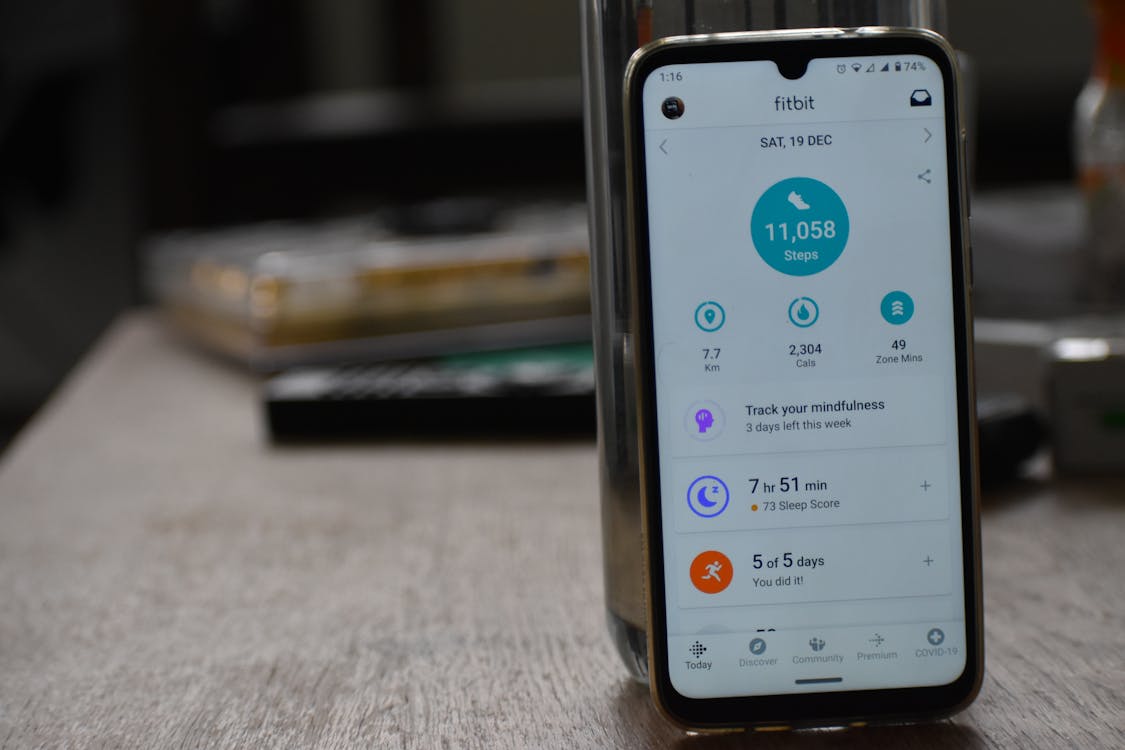
Structured training guidance consistently outperforms going it alone. A 2025 randomised controlled trial with 112 participants found in-person supervised training achieves 88.2% session adherence versus 81.2% for app-guided training and just 52.2% for self-guided PDF programs (PMC, 2025). The gap between structured guidance and no guidance is significant. The gap between human and app-delivered guidance is much smaller.
Where a personal trainer has a genuine edge:
Real-time form correction is something no app can replicate. A trainer can see that your knees are caving on a squat, your back is rounding on a deadlift, or your elbow is flaring on a press, and correct it before it becomes a movement habit or an injury. For beginners learning technically demanding movement patterns, that feedback is genuinely valuable. The human accountability relationship matters too: it’s harder to skip a session when someone is waiting for you.
A 2024 study also found that PT-supervised participants made greater squat strength gains (+36.21 kg) compared to individually trained groups (+20.05 kg) over 12 weeks, with supervised participants also following nutritional guidance at 77–82% compliance versus 39–48% without supervision (PMC, 2024). The relationship produces real performance differences.
Where AI-powered programming has a genuine edge:
A trainer is one person with one set of specialisations and a finite number of working hours. Prism applies consistent, research-backed programming logic across all eight goal types without fatigue, scheduling constraints, or knowledge gaps between specialisms. It holds your complete training history, tracks trends across months rather than weeks, and integrates biometric data that even the most attentive trainer couldn’t monitor continuously between sessions.
A 2024 PMC study evaluating GPT-4’s exercise prescription found that while AI-generated programs can maintain health for average-fitness users, they fell short on individualized intensity zones, condition-specific modifications, and progression strategies without proper personalisation layers (PMC, 2024). This is an honest limitation worth naming, and it’s exactly what Prism addresses by building goal-specific programming logic that goes beyond generic AI text generation.
The most useful framing: a personal trainer is the best tool for learning correct form on complex movements and building early training habits. A properly built AI coach is the right tool for generating a scientifically sound, goal-specific program, tracking long-term progress, and adapting to your real recovery state, consistently, at scale, at no cost.
Citation capsule — adherence and format: A 2025 randomised controlled trial (n=112) found in-person supervised training achieved 88.2% session adherence, app-guided training achieved 81.2%, and self-guided PDF programs achieved just 52.2% over 10 weeks. The adherence gap between structured guidance (human or app) and self-managed training is far larger than the gap between the two structured formats.
What Does a Personal Trainer Actually Cost in the UK?
Cost is the most significant practical barrier to personal training access. The average UK personal trainer charges £40–£50 per session nationally; London rates average £100.52 per hour (Bark.com, 2025). Training twice a week at the national average puts you at roughly £360 per month, adding up to over £4,300 per year. Once a week is still £180 per month and £2,160 annually.
This isn’t an abstract consideration. According to ukactive consumer research, 68% of UK adults who don’t hold a gym membership cite cost as the primary barrier, the highest-ranked reason across all demographics surveyed (ukactive via Chemist4U, 2024). Personal training then adds substantial cost on top of a gym membership many already consider expensive.
Prism is currently in open beta. AI program generation, coaching chat, training readiness scoring, and long-term progress tracking are all completely free. Science-backed, personalised training shouldn’t require a £4,000 annual budget.
Frequently Asked Questions
Does Prism replace a personal trainer for a complete beginner?
For complete beginners learning complex barbell movements (deadlifts, squats, overhead pressing), a few initial sessions with a qualified trainer to establish correct form is genuinely useful. Prism can’t see your technique in real time. That said, Prism is fully functional for beginners from day one. It builds a program matched to your experience level, guides session structure, and adapts as you progress. Most beginners don’t start with Olympic lifts. They start with accessible exercises where the coaching need is substantially lower.
How does Prism handle movement restrictions or injuries?
During program setup, you can specify movement restrictions and add notes about injuries or areas to work around. Prism uses this information to build a program that avoids conflicting exercises. Rehabilitating a shoulder? Overhead pressing variants are excluded or replaced. This isn’t a substitute for physiotherapy or medical advice, but it does mean the program stays productive without compounding existing problems. For rehabilitation as a primary goal, Prism builds a controlled, progressive loading program specifically suited to that objective.
Can I switch between training goals as my priorities change?
Yes. You can update your goal type at any time and Prism will rebuild your program around the new objective. Each goal type uses a different programming framework, so switching from hypertrophy to strength changes rep targets, rest periods, and exercise selection throughout. Your full training history is preserved, so your previous progress data stays visible regardless of goal changes.
How does Prism decide when to increase weights or progress the program?
Prism looks at two things: your recent session performance (completed reps versus targets, RPE) and your current training readiness score. If you’ve consistently hit the prescribed reps across multiple sessions and your readiness is in a healthy range, the conditions for progression are met. If your readiness is suppressed due to poor sleep, elevated resting HR, or high recent training load, Prism’s recommendation shifts toward maintaining current load rather than pushing for new maxima. For the full breakdown of how the readiness score works, read The Science Behind Prism’s Training Readiness Score.
Is Prism only for resistance training goals?
No. Prism supports cardiovascular and mobility goals alongside all resistance training objectives. Cardiovascular programming operates on heart rate zone-based logic rather than rep counting. Mobility programming uses time-based holds, active range of motion work, and progressive loading protocols. Endurance and rehabilitation are also fully supported, each with their own programming approach distinct from standard strength or hypertrophy programming.
Start Training to Your Goal, Not Someone Else’s
Generic programs were built for a hypothetical average person. They weren’t written for your goal, schedule, equipment, or training history, and the research makes clear that this matters. Personalised, periodized programs produce better results than non-personalised alternatives. Structured guidance, whether human or app-delivered, dramatically outperforms going it alone.
Key takeaways from the evidence:
- Goal specificity is non-negotiable. Strength, hypertrophy, power, rehabilitation, and cardiovascular fitness each require different rep schemes, loads, rest periods, and exercise selection. A single generic template can’t serve all of them.
- Periodization delivers measurably better outcomes. Structured progression produces statistically better results than non-periodized training (ES=0.31, PubMed, 2022).
- Structure improves adherence substantially. App-guided training achieves 81.2% session adherence versus 52.2% for self-guided programs (PMC, 2025).
- Cost doesn’t need to be the barrier it currently is. At £360/month for twice-weekly PT sessions, personal training is inaccessible for most people. Prism’s AI coaching is free.
Download Prism on iOS and get a program actually built around you: your goal, your equipment, your schedule, and your readiness data. Want to understand how Prism determines whether you’re ready to push harder before each session? Read the full science behind the Training Readiness Score.
Written by the Prism Team. Prism is a free iOS training app that generates personalised workout programs based on your goal type, experience level, available equipment, and daily readiness data from Apple Health.